How to Optimize TV Viewing in Your Camping Trailer

Creating the Perfect TV Experience in a Camper Trailer: A Practical Guide for International Travelers
For global adventurers, camper trailer living seamlessly blends outdoor freedom with modern comfort. After a day of hiking or exploration, a thoughtfully designed TV system can be the perfect companion for unwinding. This article offers four key strategies to help international travelers build a professional-grade audio-visual entertainment space in their mobile home, with special emphasis on choosing the right TV for camping trailer setups.

The Art of Signal Capture: Cross-Regional Audio-Visual Connectivity
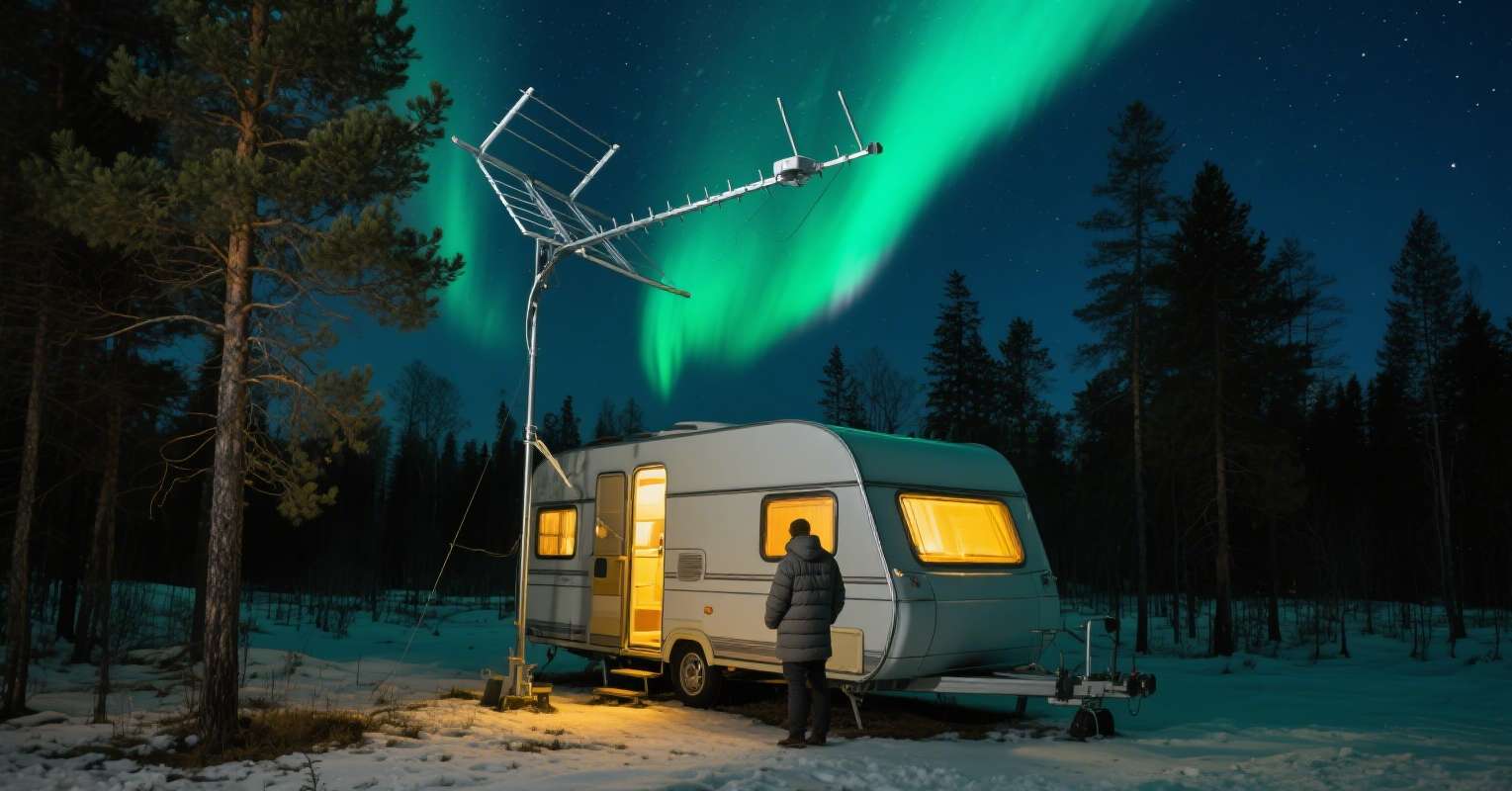
Maintaining stable signal reception in remote areas requires professional solutions. We recommend choosing an automatic satellite antenna system, such as the Winegard Pathway X2, which supports global signal coverage. Its automatic positioning function can quickly adapt to satellite orbits in North America and Europe. For those traveling across multiple countries, we recommend configuring multi-LNB receivers to accommodate different regional broadcast standards, while also preparing digital signal converters to address PAL/NTSC format differences.
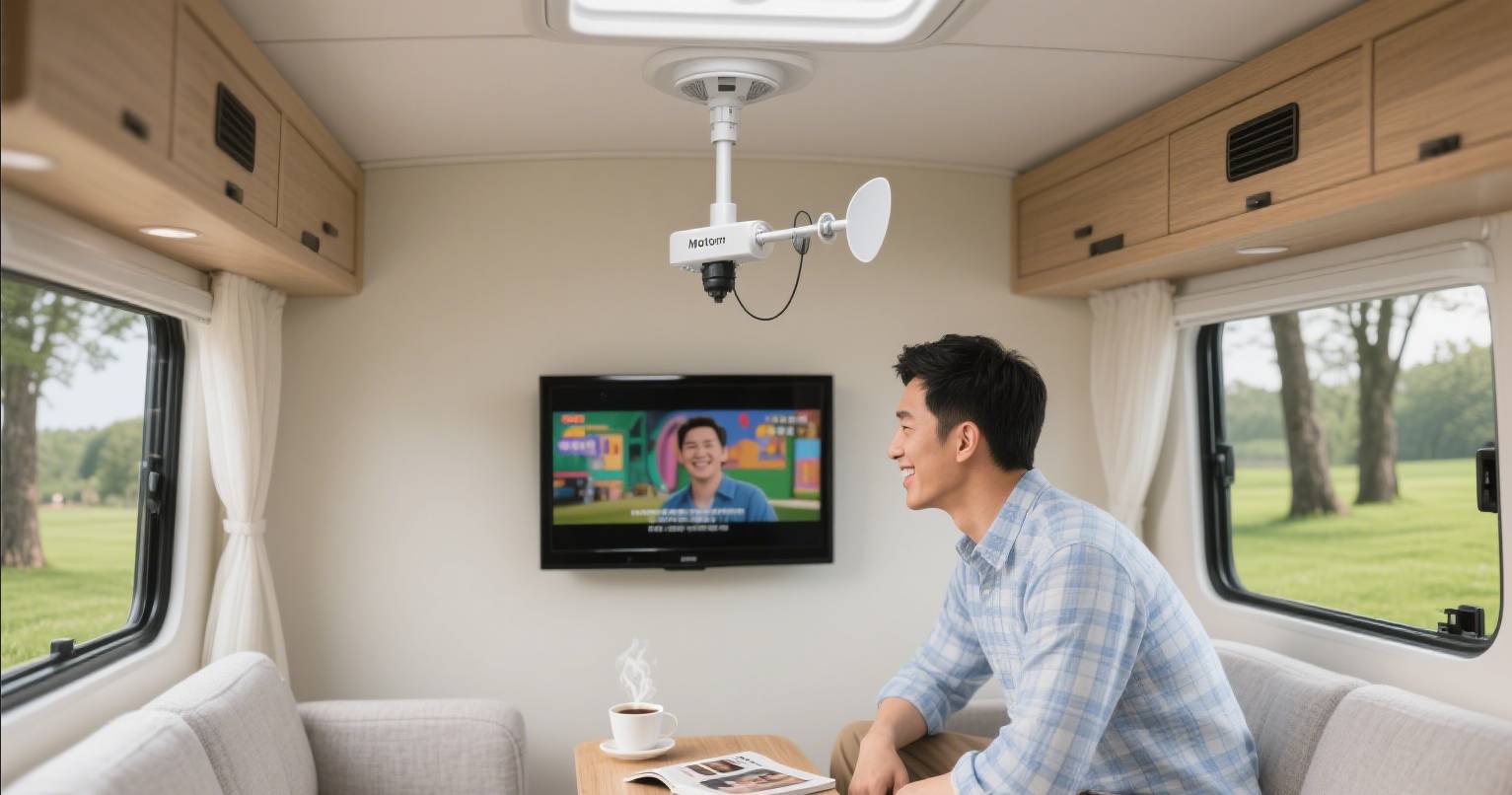
For vehicle-mounted antennas, we recommend enhanced flat-panel antennas like the Mohu Leaf Metro, prioritizing external metal brackets for installation over suction cup solutions. When traveling in EU countries, consider DVB-T2 standard terrestrial digital TV receivers. It is also wise to carry a signal amplifier to address signal attenuation in mountainous areas and download apps like TV Signal Locator in advance to assist in locating transmission towers. Selecting the right TV for camping trailer means balancing portability, durability, and reception capability in diverse terrains.
Power Management System: Sustainable Entertainment Solutions
Building an efficient energy system requires a three-tier architecture: solar power priority – lithium-ion battery storage – intelligent distribution. It is recommended to install a dedicated 12V DC TV interface directly connected to the trailer’s solar power system. It is recommended to choose an LED TV with power consumption below 50W, paired with a smart socket with power sequencing functionality to automatically disconnect non-essential loads when the battery voltage drops below 11.8V.
For energy storage devices, it is recommended to choose a lithium iron phosphate battery pack paired with a 3000W pure sine wave inverter. It is also practical to adopt a time-shifted recording strategy, utilizing the midday period with ample sunlight for program recording. For travelers frequently crossing different time zones, configuring a digital set-top box with GPS automatic time synchronization ensures the program guide aligns with local time. The best TV for camping trailer solutions should integrate seamlessly with these power-saving systems, ensuring uninterrupted viewing even in remote off-grid locations.
Space Optimization Design: Ergonomic Audio-Visual Cabin
Viewing angle optimization should comply with ISO 13406-2 standards, with the screen centerline maintained at a 0-15-degree angle relative to the seated line of sight. It is recommended to use a hydraulic damping rotating mount for 360-degree adjustable viewing without blind spots. For lighting design, polarized LED light strips with a color temperature of 2700K, combined with black light-blocking curtains, create a professional-grade viewing environment.
For acoustic modifications, polyester fiber sound-absorbing panels can be embedded within metal walls, with products of 25mm thickness or greater selected to enhance low-frequency absorption capabilities. Compact soundbar systems such as the Bose Solo 5 are recommended, as their virtual surround technology effectively compensates for the spatial limitations of the trailer. A wireless subwoofer enhances the cinema experience, with proper vibration-proofing measures for the equipment. A well-selected TV for camping trailer should complement this ergonomic design, fitting perfectly into compact interiors without sacrificing screen quality.
Global Content Strategy: Cross-Cultural Entertainment Solutions
When building a multimedia library, a three-tier classification system is recommended: geographically related content (e.g., national park documentaries), language learning resources (films and TV shows with bilingual subtitles), and cultural exchange materials (local news channels). The Plex media server is recommended for setting up a personal streaming platform, paired with a NAS storage device for cross-device access.
For multilingual needs, configure a Blu-ray player that supports multiple audio tracks, paired with a Logitech Harmony remote control to switch between scene modes. For network connectivity, a 4G mobile hotspot such as the TP-Link M7350, paired with ExpressVPN, allows access to home streaming services. Establishing a content update schedule, such as adding new documentary resources from newly visited locations every quarter, ensures fresh viewing experiences. To maximize enjoyment, travelers should pair these systems with a versatile TV for camping trailer that supports global compatibility and diverse content formats.
This professional-grade audio-visual system not only enhances the quality of your travels but also serves as a medium for cultural exchange. Whether watching local nature documentaries in Norway's fjords or indigenous cultural programs in Australia's desert, the TV screen becomes a window connecting different civilizations. Through scientific planning and professional configuration, a camping trailer can achieve an audio-visual experience that rivals that of a fixed residence, perfectly balancing digital entertainment with outdoor adventure. By carefully choosing the right TV for camping trailer, travelers can elevate their mobile lifestyle into a seamless fusion of freedom, comfort, and cultural discovery.
7 Features to Look for in a 360 Degree Outdoor Antenna
VHF vs UHF Antennas-Which One Works Best for Your Digital TV Setup
Related Article